Case study in Spain (The Basque Country)
| dc.rights.license | Attribution 4.0 International | * |
| dc.contributor.author | Arroyo-Sagasta, Amaia | |
| dc.contributor.author | Zubizarreta Pagaldai, Ane | |
| dc.contributor.editor | Herrero, César | |
| dc.contributor.editor | López Cobo, Montserrat | |
| dc.date.accessioned | 2026-02-24T15:22:51Z | |
| dc.date.available | 2026-02-24T15:22:51Z | |
| dc.date.issued | 2025 | |
| dc.identifier | https://data.europa.eu/doi/10.2760/9727987 | en |
| dc.identifier.isbn | 978-92-68-28965-5 | en |
| dc.identifier.other | https://katalogoa.mondragon.edu/janium-bin/janium_login_opac.pl?find&ficha_no=200604 | en |
| dc.identifier.uri | https://hdl.handle.net/20.500.11984/14045 | |
| dc.description.abstract | This chapter reflects a case study of the implementation of the SELFIE WBL tool in a dual training centre in the Basque Country. It has been carried out with a mixed methodology, collecting quantitative and qualitative data on the tool, the sessions carried out and the process. It is based on the exploration of the integration of digital skills in VET institutions to enhance learner readiness for the evolving workforce. It emphasises the significance of aligning digitalisation in education with the demands of the modern economy and provides guidelines for a proper implementation of the SELFIE WBL tool in schools offering dual training. In the context of the Basque Country Community’s VET system, the integration of digitalisation is a strategic imperative to foster economic revitalisation and talent development. The latest VET law underscores the essential role of digital technologies in preparing individuals with the necessary digital competences for professional activities. This emphasis is aligned with the broader mission of creating an ecosystem for economic revitalisation based on a human capital and talent strategy. By integrating digital skills into vocational training, the system aims to equip learners with the competences required to thrive in a digitally driven workforce. The policy relevance of this work lies in the qualitative information collected and the detailed proposed guidelines. Both elements offer the opportunity to learn about the experience of a school located in a quality VET system and to improve it by means of the proposed guidelines. The study’s key conclusions underscore the importance of expert support in guiding stakeholders through the implementation of digital tools like the SELFIE WBL questionnaire. Teachers and management teams value the presence of experts in interpreting results and formulating actionable objectives. Clear communication and understanding of objectives among all participants are crucial for the successful integration of digital tools in educational settings. The study highlights the positive impact of expert guidance in contextualising and utilising digital resources effectively, emphasising the need for ongoing support and collaboration amongst stakeholders. Based on these results, the study concludes that there is a need to provide schools with a detailed overview of the process for implementing SELFIE WBL, with clear guidelines for involving all stakeholders in the school community. In this way, we will be able to contribute to the autonomy of schools to carry out the SELFIE WBL exercise. This chapter proposes general guidelines on the overall process of SELFIE WBL implementation. It also provides differentiated guidelines for each profile involved: management team, coordinator, teacher staff, learners, and in-company trainers. Future efforts should focus on enhancing communication strategies to ensure a mutual understanding of objectives across all participants. Additionally, further research is needed to explore the impact of expert support on the implementation of digital tools in educational settings. | en |
| dc.format.extent | 30 | en |
| dc.language.iso | eng | en |
| dc.publisher | Publications Office of the European Union | en |
| dc.rights | © European Union, 2025 | en |
| dc.rights.uri | http://creativecommons.org/licenses/by/4.0/ | * |
| dc.title | Case study in Spain (The Basque Country) | en |
| dcterms.accessRights | http://purl.org/coar/access_right/c_abf2 | en |
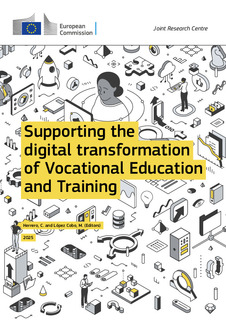
| dcterms.source | Supporting the digital transformation of vocational education and training | en |
| local.contributor.department | KoLaborategia | eu |
| local.contributor.group | Hezkuntza berrikuntza | eu |
| local.contributor.group | Innovación educativa | es |
| local.contributor.group | STEM eta digitalizazioa | eu |
| local.contributor.group | STEM y digitalización | es |
| local.description.peerreviewed | true | en |
| local.description.publicationfirstpage | 108 | en |
| local.description.publicationlastpage | 138 | en |
| local.identifier.doi | 10.2760/9727987 | en |
| local.contributor.otherinstitution | https://ror.org/00wvqgd19 | |
| local.source.details | C. Herrero & M. López Cobo (eds.). Publications Office of the European Union | en |
| oaire.format.mimetype | application/pdf | en |
| oaire.file | $DSPACE\assetstore | en |
| oaire.resourceType | http://purl.org/coar/resource_type/c_3248 | en |
| oaire.version | http://purl.org/coar/version/c_970fb48d4fbd8a85 | en |
| dc.unesco.tesauro | http://vocabularies.unesco.org/thesaurus/concept1829 | en |
| oaire.funderIdentifier | https://ror.org/00k4n6c32 / http://data.crossref.org/fundingdata/funder/10.13039/501100000780 | en |
| dc.unesco.clasificacion | http://skos.um.es/unesco6/580101 | en |
Ficheros en el ítem
Este ítem aparece en la(s) siguiente(s) colección(es)

Excepto si se señala otra cosa, la licencia del ítem se describe como Attribution 4.0 International